Bose
Finding the heart in technical excellence
Bose
Project overview
Mission
Bose came to us with a classic launch brief: new speaker product, industry-leading sound, build a plan around it. The problem was in the brief itself. Bose was already regarded as technically excellent — cold, precise, authoritative — but in a category built on music's ability to move people, technical authority reads as distance. Bose was a block of ice in a category that should make you feel like you're on fire.
Discovery
Brand perception data established the first obstacle: in consumer electronics, technical excellence is table stakes. Every credible brand in the category earns credit for it, whether they make the claim or not. Primary survey work made the situation more interesting. Virtually every consumer who had recently purchased home audio believed they had bought the most technically excellent option available in their price range.
With the technical route closed, a first-principles inquiry into the category surfaced something unexpected. Headphones signal social deference: "I will not disturb you." Speakers signal the opposite: "I am in charge here." Speakers are instruments of control.
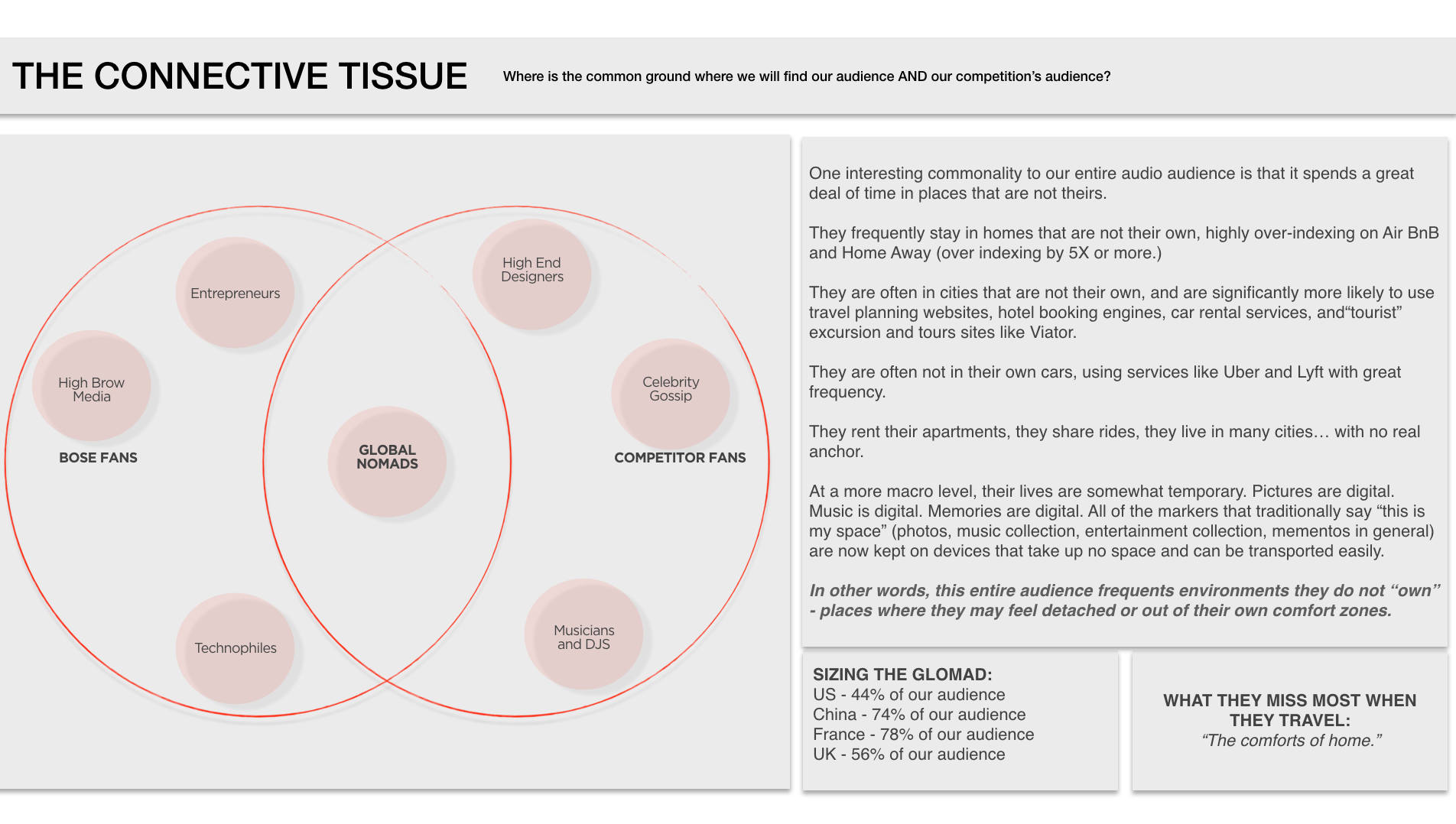
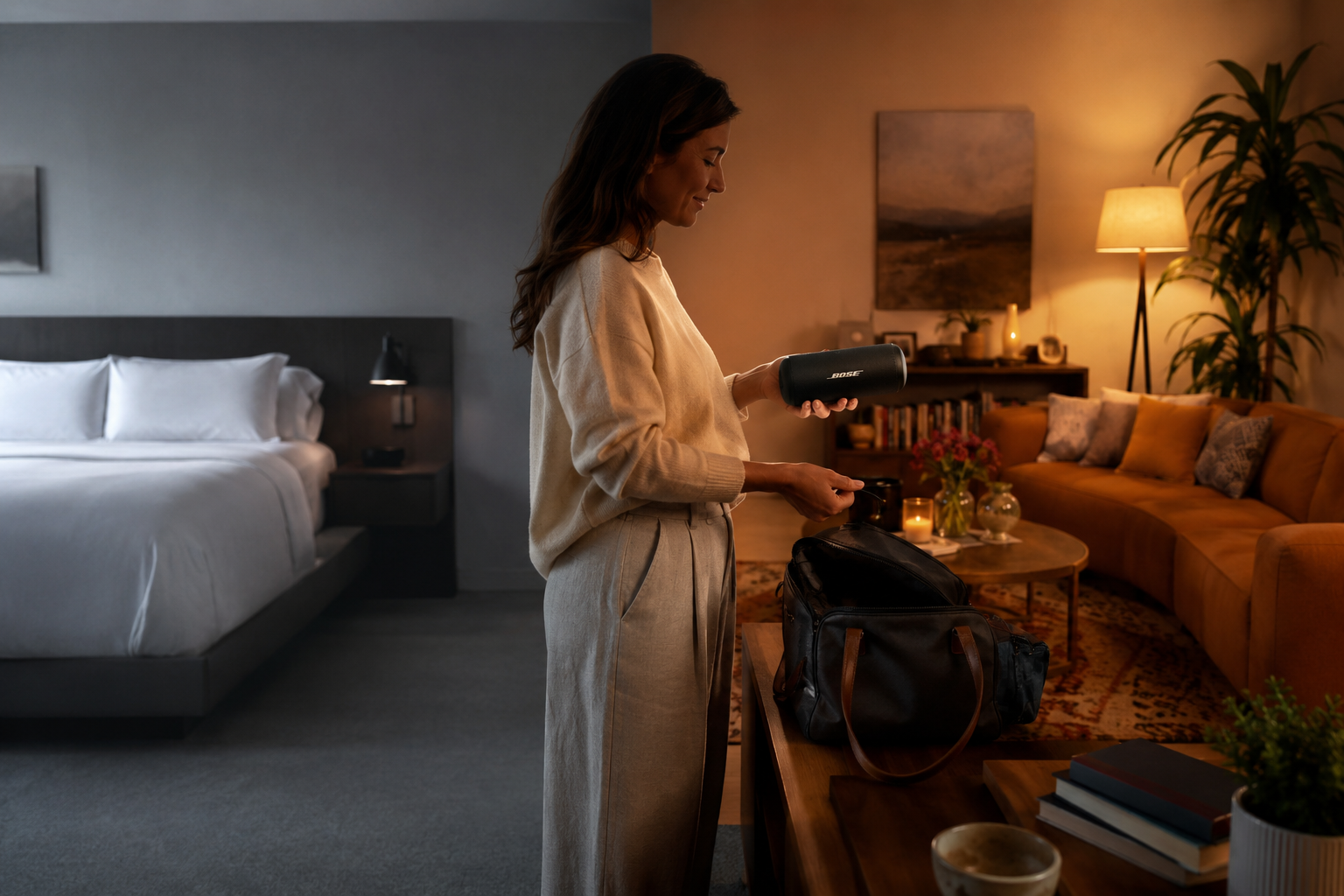
We then noticed that the target audience showed disproportionate activity across a consistent cluster of temporary-space signals: rideshare apps, short-term rentals, Airbnb, roommate finders, hotel loyalty programs, airline platforms. These were people who spent significant portions of their lives in spaces they did not own and could not control. A multi-market survey confirmed the emotional dimension: when asked what they missed most when traveling or living away from home, the answer was consistent across every market: the comforts of home.
Landing
First, the bad news: we did not win the business.
Now the good news: the strategic platform became the internal proof of concept that convinced Burson's global leadership of the distinction between claiming to be evidence-based and drawing an insight from the evidence. The research journey (from proprietary brand perception data to primary survey work to behavioral analysis to multi-market validation) demonstrated concretely the extent to which a dedicated planning function could impact the quality of our work. It directly catalyzed the funding of Burson-Marsteller's first strategic planning department, enabling me to add headcount and data assets. We generated $20 million within two years.